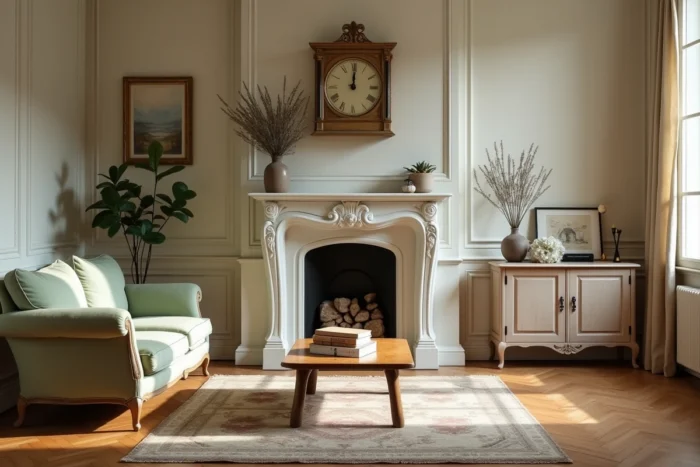
The French art of living refers to an approach to daily life where every domestic choice, from furniture to table linens, reflects a focus on the quality of materials, visual harmony, and comfort of use. This concept goes beyond mere interior decoration: it encompasses the way of hosting, organizing a home for real life, and selecting objects designed to last.
Sustainability and regulation: what is changing in French decoration
The French decorative lifestyle has long relied on an aesthetic promise. Today, this promise must contend with regulatory constraints that alter how manufacturers design and market their products.
The AGEC law pushes players in the decoration sector towards greater circularity and reparability. Furniture and decorative object manufacturers must guarantee the availability of spare parts and inform buyers about the estimated lifespan of their products. For a sofa or a handcrafted table, this means that the choice of a replaceable fabric or a sandable tabletop is no longer a marketing argument, but an increasing obligation.
On the connected home side, requirements have tightened regarding cybersecurity, software updates, and data protection. Integrating smart lighting or a connected thermostat into a Parisian apartment is no longer just about choosing an elegant design: the duration of software maintenance conditions the longevity of the installation.
These developments do not hinder the market. They redirect it. French brands offering collections of tableware, textiles, or handcrafted furniture now leverage these constraints to highlight local craftsmanship and traceable materials. My French Touch illustrates this trend by bringing together creators who place French manufacturing and longevity at the center of their offerings.

Decoration and family uses: going beyond the showcase interior
Decorative media increasingly treat the French art of living as a subject of global lifestyle intersecting decoration, well-being, and real domestic uses. The image of the Haussmannian apartment frozen in museum-like perfection is giving way to interiors designed to be lived in, sometimes disrupted, by a family.
A solid oak floor withstands the repeated passage of children and dogs. A washed linen tablecloth endures stains and frequent washes without losing its shape. Glazed stoneware tableware absorbs daily shocks better than fine porcelain reserved for special occasions.
Concrete criteria for a timeless French interior
- Favor removable and machine-washable textiles for living room seating, rather than fragile fabrics that require professional cleaning
- Choose washable matte or satin wall finishes compatible with quick maintenance in high-traffic areas
- Opt for handcrafted stoneware or thick earthenware tableware designed for everyday use, not just for the photo
- Check the availability of spare parts for furniture (legs, hinges, mechanisms) to extend its lifespan
This shift towards functionality does not sacrifice style. It makes it sustainable. An interior where every object fears real life ultimately becomes a source of stress rather than a place of well-being.
Mix and match and decorative sobriety: the new grammar of French style
Editorial content and recent collections now associate the French art of living with mix and match and decorative sobriety rather than a strictly heritage-focused vision. Mixing a Louis-Philippe chest of drawers with a contemporary brass lamp, placing mismatched handcrafted tableware on a raw linen tablecloth: these combinations reflect a lively approach to decoration.
This evolution moves away from the coordinated total look that dominated decoration magazines just a few years ago. The contemporary French home embraces contrasts between old and modern, between inherited pieces and new acquisitions.
Three combinations that work in an apartment or house in France
- Antique solid wood furniture combined with sleek designer lighting, creating a dialogue between eras without overcrowding the space
- Home textiles in natural fibers (linen, cotton, hemp) paired with contemporary tableware featuring minimalist lines
- Walls in neutral shades (off-white, greige, pale terracotta) serving as a backdrop for one or two handcrafted decorative objects that catch the eye
Sobriety does not mean austerity. It involves reducing the number of visible elements to better highlight those that remain. A ceramic vase placed alone on a console has more presence than an accumulation of objects on an overloaded shelf.
The art of the table and hospitality: daily life as a style terrain
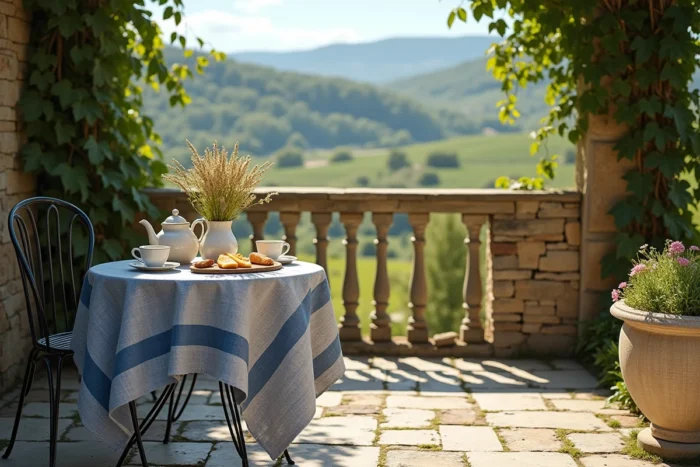
The art of the table remains a pillar of the French art of living, but its expression has changed. Setting a table no longer requires a complete identical service for each guest. French creators offer ranges designed to be mixed: plates of different sizes, complementary colors, varied textures within the same meal.
This approach transforms each meal into an act of ephemeral decoration. The choice of a tablecloth, a bouquet of flowers from the market, a cheese presented on a raw wooden board contributes to a lifestyle where attention to detail is expressed without formality.
The guide to this new French lifestyle is no longer the rigid protocol of classical table arts. It is a shared sensitivity to authentic materials, local craftsmanship, and a form of elegance that accepts imperfection. A chipped glass on a waxed walnut table tells a story that industrial perfection cannot offer.
The French art of living as it is practiced today in France, in a family apartment or a country house, hinges on this ability to reconcile aesthetic demands and domestic reality. The objects that endure through the years are those that withstand the life imposed on them, not those that are protected from it.