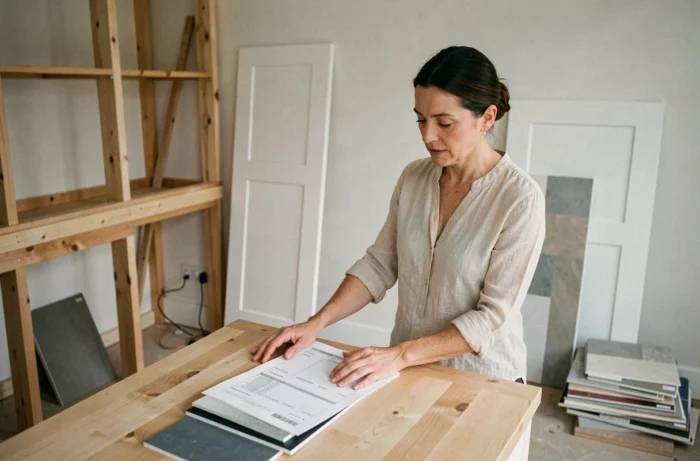
When you start estimating the layout of a kitchen, the first instinct is to look at the price of the furniture. The problem is that the furniture only represents part of the bill. Between the networks to be redone, the appliances to be integrated, and the finishes, the final budget often deviates from the initial quote by several thousand euros.
Relocating networks: the item that blows up the kitchen quote
We can’t say it enough: relocating plumbing or electricity radically changes the bill. A kitchen where the layout remains the same (sink in the same place, water supply retained) costs significantly less than a project where every water point and outlet is repositioned.
A recent estimate clearly distinguishes two scenarios. A renovation with furniture and finishes, without touching the networks, is around 450 to 600 euros per square meter. As soon as plumbing, electricity, or drainage need to be redone, it jumps to 600 or even 1,000 euros per square meter.
In practical terms, on a medium-sized room, this difference can represent several thousand euros. Before validating a plan with a kitchen designer, it’s wise to check if the new layout requires relocating pipes or running new electrical circuits. This is often where the gap between a controlled project and a budget overrun occurs.
To better anticipate these items, you can consult the budget to plan for a kitchen on Maisons Alternatives, which details the ranges according to the level of intervention.
Built-in appliances: one-fifth to one-third of the total cost
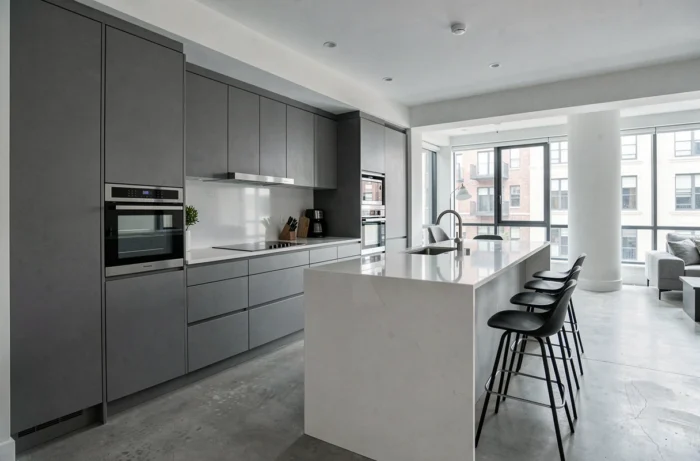
Two kitchens with the same furniture can show very different quotes. The reason often lies in the appliances. This item commonly represents 20 to 30% of the cost of a fitted kitchen, depending on the range level and the number of built-in devices.
A basic oven, a ceramic hob, and an entry-level dishwasher have nothing to do, price-wise, with a pyrolytic oven, an induction hob, and a silent dishwasher. The ability to integrate also incurs an additional cost: a built-in appliance requires specific casing and sometimes adapted ventilation.
Balancing between range and number of appliances
When the budget is tight, you might consider reducing the number of built-in appliances rather than opting for everything at the entry level. Keeping a freestanding refrigerator instead of integrating it into a column, for example, frees up a budget that can be reinvested in a more durable countertop or a higher quality oven.
The idea is not to sacrifice comfort but to focus the budget on the appliances we use daily. A high-performance oven and a good hood contribute more to comfort than a built-in microwave that could be placed on a countertop.
Countertops and materials: what ages well and what doesn’t hold up
The choice of countertop weighs heavily in the budget, but especially in the kitchen’s durability. A laminate countertop costs much less than quartz or granite, but its resistance to scratches and heat is limited.
- Laminate is suitable for tight budgets and lightly used kitchens, but it degrades within a few years of intensive use
- Quartz offers a good compromise between durability, easy maintenance, and aesthetic appeal, at an intermediate price
- Granite and high-end mineral surfaces last for decades, but their price and weight require professional installation
The countertop is the most used surface in the kitchen. Cutting back on this item to invest in decorative facades is a common mistake. Facades can be easily replaced, but countertops much less so.

10% VAT on kitchen work: real conditions
In a property completed more than two years ago, certain renovation works may benefit from a 10% VAT instead of 20%. Painting, tiling, plumbing, and equipment incorporated into the structure potentially fall under this regime.
However, simply placed furniture and non-integrated appliances remain at 20%. The distinction is made line by line in the quote, and feedback varies on this point depending on the artisans and situations.
To take advantage of this, the work must be carried out by a professional who provides the materials. If you buy the tiles yourself and have them installed, only the labor can qualify for the reduced rate. This detail changes the purchasing strategy: sometimes, having everything supplied and installed by the same artisan is cheaper than separating supplies and installation.
Building your kitchen budget item by item
Rather than thinking in terms of total price, it’s beneficial to break the project down into four main lines:
- The furniture and facades, which define the style and available storage
- The countertop and backsplash, which endure daily wear
- The appliances, whose weight in the budget often surprises
- The technical work (plumbing, electricity, coverings), which directly depends on the chosen layout
This breakdown allows you to identify the item on which you can make a compromise without degrading the overall quality. A project well distributed among these four lines ages better than a kitchen where the entire budget is spent on facades.
The cost of fitting a kitchen depends less on the surface than on technical choices. Keeping the existing layout, balancing between built-in and freestanding appliances, checking the applicable VAT line by line: these decisions made before the first quote do more for the budget than any online comparator.