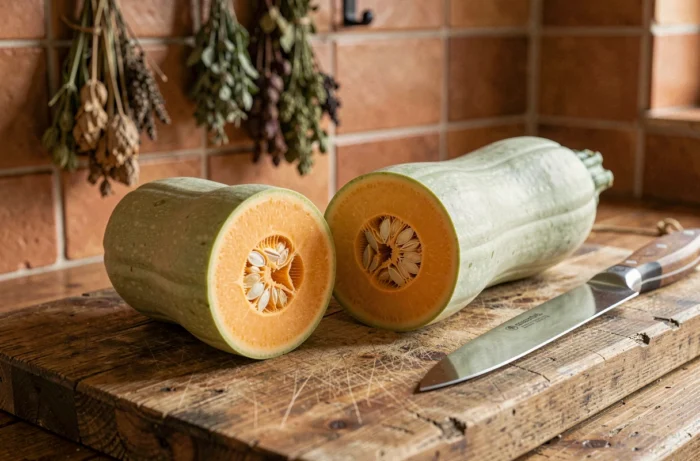
The long squash from Nice is a dense and slightly sweet fleshed gourd, closely related to zucchini in its botanical family but more watery when ripe. This particularity requires an adapted preparation to achieve a quick, golden, and tasty sauté on a weeknight. Cooking the long squash from Nice in a pan takes less time than a gratin or a velouté, provided you master two or three technical gestures that change the entire result.
Salting: the gesture that speeds up pan cooking
The flesh of the long squash from Nice contains a lot of water. Without prior preparation, the pieces release their juice into the pan, simmer instead of browning, and the cooking time extends. The result is a mushy texture and bland taste.
Draining the flesh with coarse salt before cooking solves this problem. The method is simple: cut the squash into cubes or thin slices, place them in a colander, sprinkle with coarse salt, and let rest for about fifteen minutes. The water is released by osmosis.
After this time, briefly rinse the pieces under cold water to remove the excess salt, then dry them thoroughly with a clean cloth or paper towel. This drying step is as crucial as the draining itself: pieces that are still damp will spit in the hot oil and won’t caramelize. To deepen the technique with spice variations, the long squash recipe from Cuisine Gratuite details an express version suitable for rushed evenings.
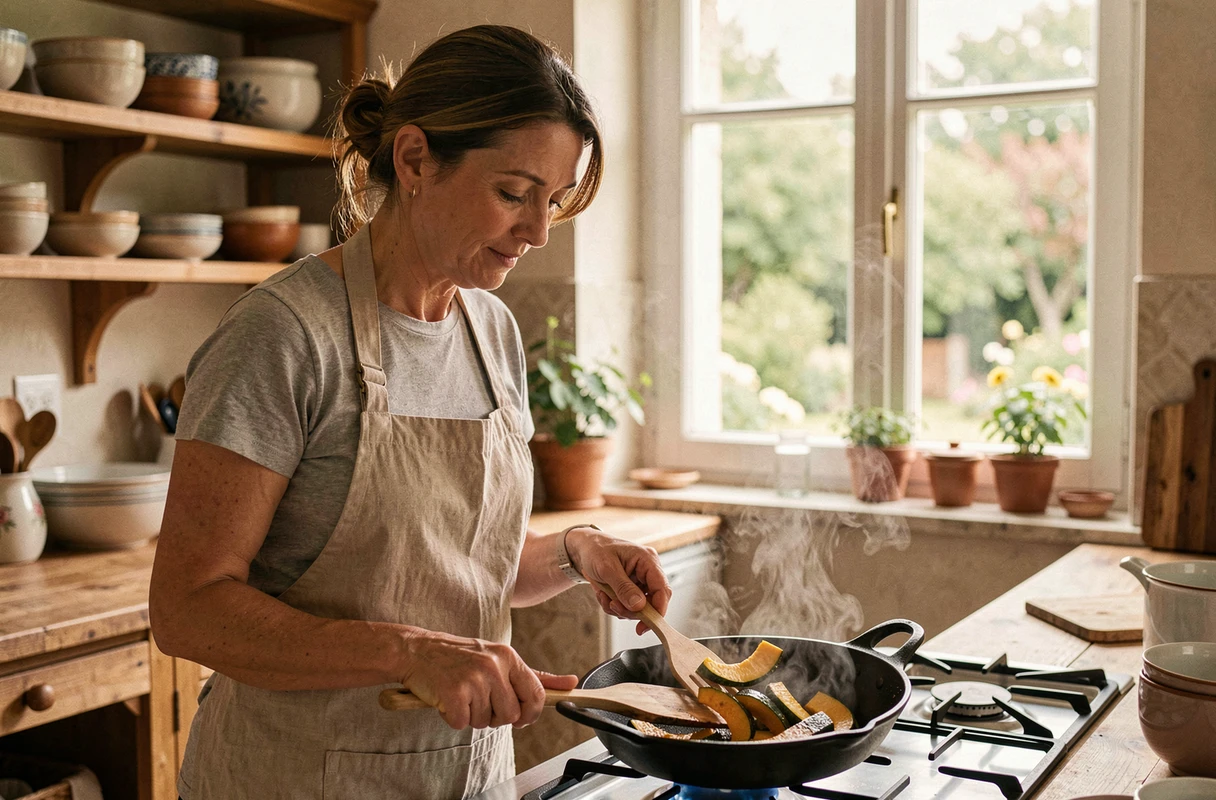
Cutting and sizing squash pieces for quick cooking
The choice of cutting directly influences the time spent in front of the stove. Cubes that are too large remain raw in the center while the outside begins to burn. Slices that are too thin disintegrate.
Cubes of two centimeters on each side offer the best compromise. They brown on several sides and cook through in just a few minutes over high heat. For half-moons, aim for a thickness of about half a centimeter.
Should you peel the long squash from Nice?
On a young and firm specimen, the skin remains thin and perfectly edible. Keeping it has a double advantage: it maintains the integrity of the pieces during cooking and preserves heat-sensitive compounds like vitamin C and certain antioxidants, concentrated just under the skin. On a more mature squash, with thick and fibrous skin, peeling is necessary.
A good indicator: if your nail easily sinks into the skin, it is edible. If the skin resists firmly to the knife, remove it.
Pan cooking the long squash from Nice: high heat and suitable oil
The pan must be very hot before placing any pieces in it. An insufficient temperature causes exactly the same effect as the lack of draining: the squash releases its water and simmers.
- Use an oil that withstands high temperatures: olive oil, sunflower oil, or canola oil are suitable. Butter alone burns too quickly, but a mixture of butter and olive oil works at the end of cooking for flavor.
- Do not overcrowd the pan. The pieces should form a single layer without overlapping, otherwise steam accumulates and prevents browning. It’s better to cook in two batches than to pile everything in at once.
- Leave the pieces undisturbed for two to three minutes before flipping them. The golden crust forms from prolonged contact with the hot bottom. Constant stirring breaks this crust and prolongs cooking.
Once the pieces are colored on two sides, lower the heat and cover for one to two minutes to finish cooking through without drying out. The flesh should remain slightly firm, not mushy.
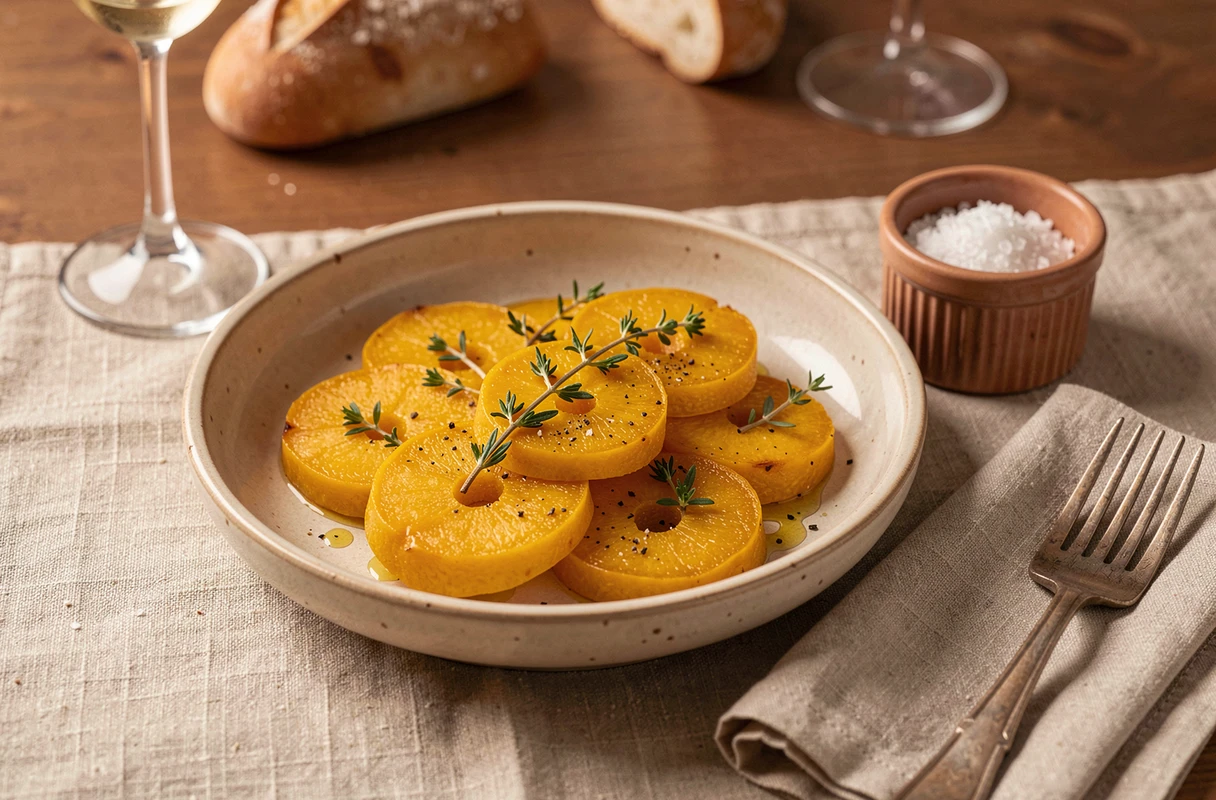
Quick seasonings for a squash sauté at dinner
The long squash from Nice has a mild, almost neutral taste when young. Seasoning makes all the difference between a bland side dish and a dish that stands on its own.
Spices and herbs that work in the pan
Adding tomato paste at the beginning of cooking brings umami and an appetizing color. A spoonful is enough, mixed with hot oil and pressed garlic before adding the squash pieces. Ground coriander and sweet chili flakes complement this Mediterranean flavor profile well.
Dill or flat-leaf parsley should be added off the heat, just before serving. Fresh herbs lose their aroma at high temperatures. This simple detail changes the perception of the dish at the moment of serving.
Express variant without spices
For a night when the pantry is empty: olive oil, fleur de sel, and a drizzle of lemon juice after cooking. The long squash from Nice handles simplicity very well. A bit of grated parmesan at serving time adds character without extra effort.
Choosing the right long squash from Nice for a quick sauté
Not all long squashes from Nice are equally suited for quick pan cooking. Young and firm specimens cook much faster than large squashes at full maturity, whose spongy and waterlogged flesh requires prolonged draining or slow cooking.
At the market or from the greengrocer, prioritize medium-sized squashes with smooth, shiny skin. The flesh should be firm to the touch, with no soft spots. The seeds inside should remain small and tender, indicating that the squash has not overripe.
A young and well-dried section will go from the cutting board to the plate in less than twenty minutes, including draining. An overripe squash, even well-prepared, will require more patience and yield a result closer to a compote than a golden sauté. Choosing the vegetable at the time of purchase remains the first factor for success in a quick dinner.