The pressure felt in the lower abdomen during pregnancy is most often related to the stretching of the ligaments that hold the uterus to the pelvic bones. As the uterus grows to accommodate the fetus, these structures are subjected to increasing tension, causing pulling sensations, cramps, or a feeling of heaviness. These manifestations affect the majority of pregnant women, but their intensity and significance vary depending on the trimester and clinical context.
Pregnancy-related lumbopelvic pain: an underestimated functional disorder
Pregnant women’s lumbopelvic pain constitutes a functional musculoskeletal disorder, without direct tissue injury or danger to the fetus, but it can be highly disabling for the mother. Recent literature emphasizes the chronic and disabling nature of this pain, well beyond mere transient discomfort.
Significant and repeated pressure in the lower abdomen can limit walking, make position changes in bed painful, and prevent climbing stairs. This functional disability is not trivial: it affects daily quality of life and can promote physical deconditioning that complicates the end of pregnancy and childbirth.
The emerging public health message is clear: downplaying significant pelvic pain during pregnancy is no longer acceptable. Appropriate follow-up exists, and recognizing it allows for early intervention. To better understand the dangers to the lower abdomen during pregnancy, it is essential to distinguish between physiological causes and warning signals.
Pressure on the pregnant belly: benign causes trimester by trimester
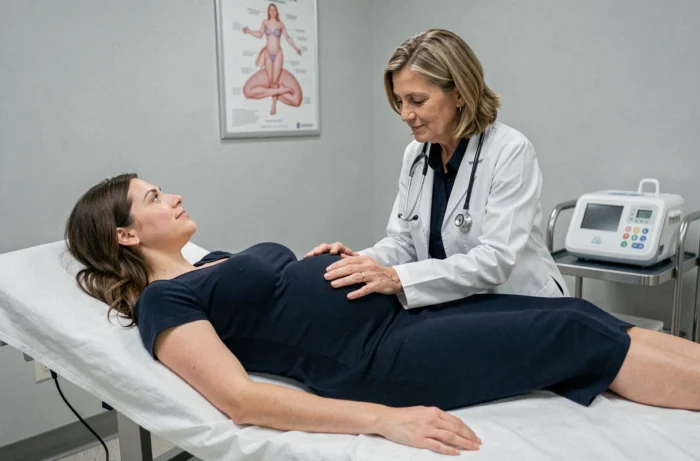
The nature of the pressure perceived in the lower abdomen evolves throughout pregnancy, as the structures involved differ from one trimester to another.
First trimester
The uterus, still small, begins to expand. The round ligaments stretch for the first time, generating low pulling sensations, often lateral. Hormonal action (relaxin, progesterone) softens the connective tissues of the pelvis and slows down transit, causing bloating and constipation that exacerbate the feeling of pressure.
Second trimester
The uterus surpasses the pubis and takes up space in the abdominal cavity. Ligament pain becomes more frequent, especially during sudden position changes. Pressure on the bladder temporarily decreases, but pressure on the abdominal muscles increases.
Third trimester
The weight of the fetus and amniotic fluid exerts direct pressure on the pelvic floor, pubic symphysis, and perineum. The sensation of heaviness in the lower abdomen becomes almost permanent for many women. The Lacomme syndrome, related to excessive relaxation of the pelvic joints, may appear at this stage and cause intense pelvic pain.
Warning signals: when pressure on the lower abdomen requires a doctor
Not all lower abdominal pain during pregnancy is due to a physiological mechanism. Certain symptoms associated with abdominal pressure necessitate prompt consultation, even emergency care.
- Vaginal bleeding accompanying pain, regardless of the trimester, may indicate an ectopic pregnancy (first trimester), placental abruption, or a threat of premature labor.
- Unilateral, sudden, and intense pain in the lower abdomen early in pregnancy suggests an ectopic pregnancy or ovarian cyst torsion, both of which are surgical emergencies.
- Regular contractions (more than four per hour) before term, associated with increasing pelvic pressure, are a sign of preterm labor.
- Fever combined with suprapubic pain may indicate a high urinary tract infection (pyelonephritis), which requires immediate antibiotic treatment.
The practical rule: any lower abdominal pressure accompanied by bleeding, fever, rhythmic contractions, or acute unilateral pain justifies a call to the maternity ward or doctor within the hour.
Physiotherapy and pelvic pressure: what recent recommendations say
The European guidelines on lumbopelvic pain in pregnant women provide valuable insights into management. Gentle manual therapy and physiotherapy are considered safe during pregnancy, with no documented danger to the fetus, when performed with appropriate techniques: gentle mobilizations, targeted muscle work, and movement advice.
In contrast, high-velocity manipulations (such as “cracking”) are not recommended as a primary treatment. This point is rarely mentioned in public content, which often conflates osteopathy and physiotherapy without specifying the limits of each approach.
Concrete measures to reduce pelvic pressure
Physiotherapy is not the only option. Several daily actions can reduce mechanical load on the lower abdomen:
- Sleeping with a pillow between the knees to align the pelvis and reduce tension on the pubic symphysis.
- Avoiding asymmetrical movements (getting into a car by pivoting on one leg, carrying a child on one hip).
- Strengthening the transverse abdominal muscle through gentle exercises prescribed by a physiotherapist specialized in perinatality.
These adjustments do not eliminate pressure, but they limit the risk of chronicity and functional disability during the last trimester.
Pressure on the lower abdomen during pregnancy remains, in the vast majority of cases, the mechanical consequence of a growing uterus. What changes the situation is how this discomfort is managed: regularly disabling pelvic pain deserves medical assessment and physiotherapy support.