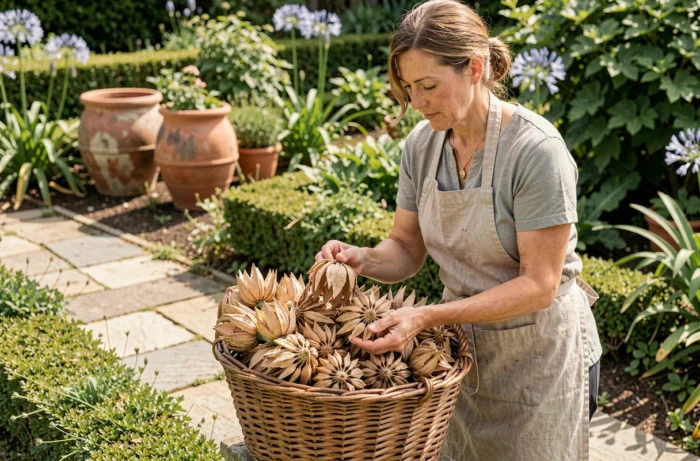
An agapanthus umbel, once faded, retains a rigid woody structure and capsules filled with seeds. Rather than systematically discarding these dry stems, several practical uses allow for their enhancement in the garden, from composting to decoration and supporting local biodiversity.
Dry agapanthus umbels and winter biodiversity
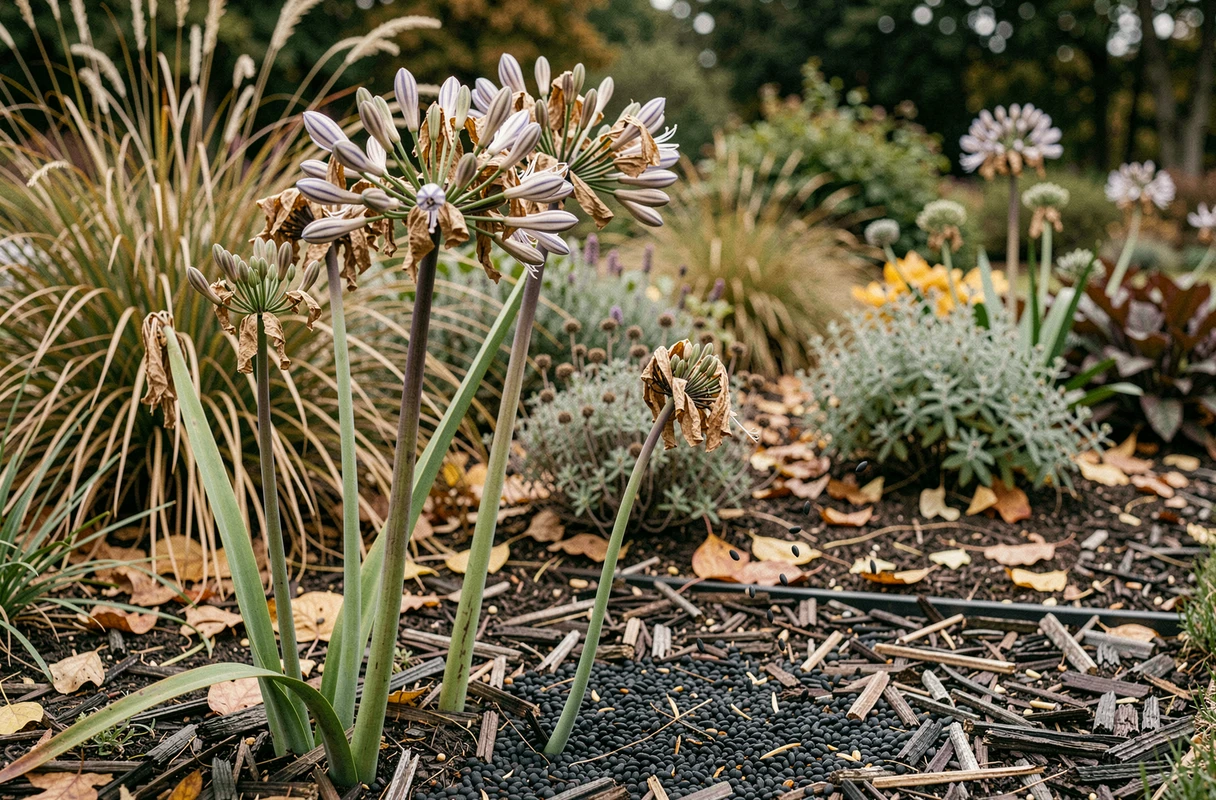
The trend of the refuge garden is leading more and more gardeners to voluntarily keep dried seed heads on the stem during autumn and winter. Agapanthus umbels, with their ball-shaped architecture perched on a tall stem, serve two useful functions for beneficial wildlife.
First, the seeds still present in the capsules serve as a food station for seed-eating birds. Goldfinches, tits, and sparrows come to perch on the stems to extract the seeds, which complements their diet at a time when resources are scarce.
Next, the hollow structure of the stem and the cells of the capsules provide micro-shelters for overwintering insects: ladybugs, lacewings, and small spiders. These beneficials help regulate aphids as spring returns.
The practical compromise is to keep a few selected umbels on the most vigorous plants while cutting the majority of the stems to avoid exhausting the rhizome. Those wondering what to do with a faded agapanthus flower often find that this selective action reconciles winter decoration and future blooming.
Dried agapanthus stems for compost: what the regulations say
Since January 1, 2024, French households must sort their biowaste separately from residual household waste. Garden green waste, including agapanthus stems and leaves, falls into this category. Failure to comply with sorting can result in a fixed fine.
Specifically, dried agapanthus flower stems compost well, provided they are fragmented. Their fibrous texture, almost woody at the end of the season, classifies them among the brown materials rich in carbon. They usefully balance a compost that is too loaded with wet peelings or nitrogen-rich grass clippings.
Preparing the stems before composting
- Cut each stem into sections of a few centimeters with pruning shears to speed up decomposition, as mechanical shredding remains optional for small quantities
- Separate the seed capsules if seed harvesting is planned; otherwise, add them as they are to the pile
- Alternate a layer of agapanthus sections with wet waste (peelings, coffee grounds) to maintain the carbon/nitrogen ratio
- Avoid composting visibly sick or spotted leaves, which could spread pathogens in the compost
Communities now provide composting or dedicated collection devices. If the volume of green waste exceeds the capacity of a home composter, the recycling center remains the complementary solution.
Dried agapanthus flowers in outdoor and indoor decoration
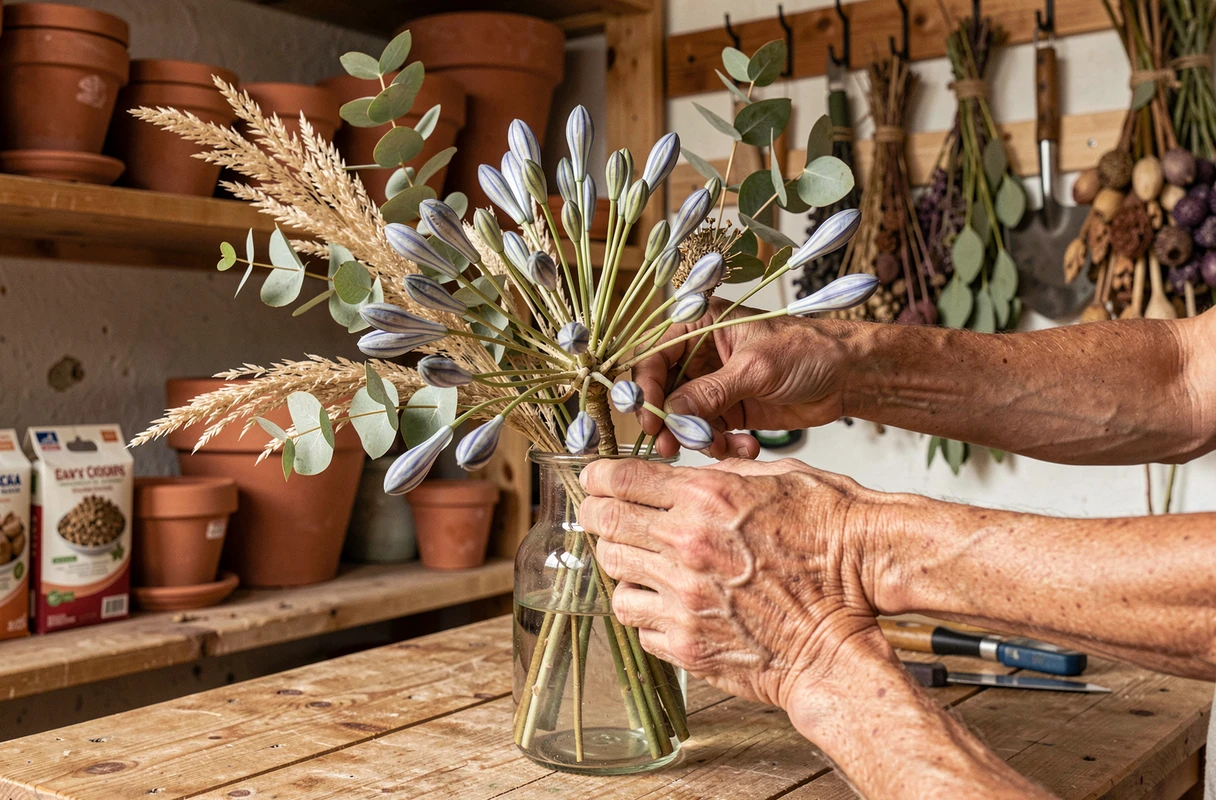
Dry agapanthus umbels possess an aesthetic quality that few faded flowers retain: a graphic silhouette that lasts several months without collapsing. This natural rigidity makes it a choice material for decorative compositions without any chemical treatment.
In the garden, dry stems planted in groups within a mass of grasses or along a path create a structuring effect during the cold season. Their straw color contrasts with evergreen foliage and dark bark.
Uses in dried bouquets
Indoors, umbels cut at full maturity (open capsules, completely dry stem) integrate into dried bouquets that last. The technique involves harvesting the stems on a dry day, late in the day, and then hanging them upside down in a ventilated, dark place for one to two weeks.
The natural hue, ranging from golden beige to light brown, pairs well with thistles, dried hydrangeas, or grass spikes. Some gardeners apply a clear plant lacquer to secure the remaining small seeds and prevent them from falling onto furniture.
Harvesting agapanthus seeds for new sowings
Harvesting seeds from faded agapanthus flowers allows for obtaining new plants without spending a penny. Each umbel contains several dozen seeds, distributed in capsules that gradually open as they dry.
The ideal time for harvesting is when the capsules begin to split but are not yet fully open. Too early, the seeds are not mature. Too late, they disperse in the wind.
Harvesting and sowing method
Sliding a paper bag around the umbel and gently shaking it allows for capturing mature seeds without losing them. The harvested seeds are stored in a labeled envelope, kept dry and out of light, until the following spring.
Sowing is done in a seed tray, under cover, in a light and draining substrate. Germination requires patience: agapanthus from seeds take several growing seasons before producing their first flowers. This significant delay explains why clump division remains the fastest propagation method.
- Harvest on dry days to avoid mold on wet seeds
- Label each batch with the variety and harvest date to track results over the years
- Sow on the surface or at very shallow depth, as seeds need light to germinate
The interest in sowing also lies in the genetic diversity obtained. Unlike division, which produces clones of the mother plant, sowing can yield plants with slightly different shades, from deep blue to pale mauve.
Faded agapanthus flowers, far from being mere plant waste, represent a resource to be exploited according to each gardener’s priorities. Biodiversity, compost, decoration, or propagation: the choice mainly depends on the number of available stems and the vigor of the mother plant, which should not be exhausted by excessive seed production.