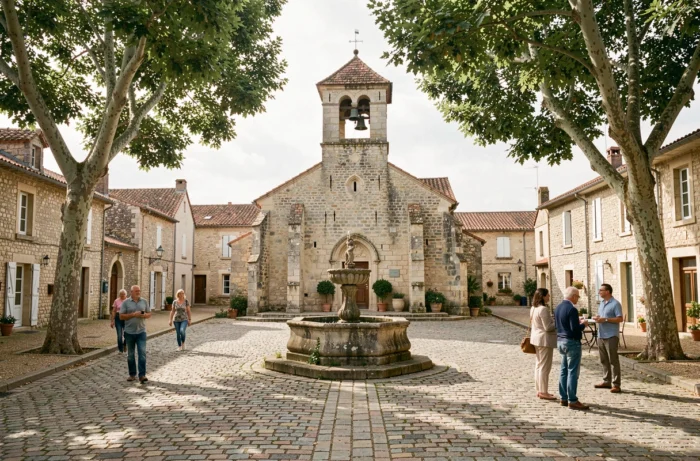
Valbréon is a new municipality born from the territorial reorganization in Seine-et-Marne. The name evokes the Bréon valley, a small watercourse that runs through Brie and has given its identity to several villages grouped together over the course of inter-municipal mergers. Understanding this territory means first grasping how rural municipalities have gradually come together to weigh against the land pressure from the Île-de-France region.
Inter-municipal merger in Seine-et-Marne: what has changed for Val Bréon
Before discussing the new municipality, we must go back to the Val Bréon community of municipalities, created in January 1995 with its headquarters in La Houssaye-en-Brie. This inter-municipality brought together about ten rural municipalities, all located in the heart of Brie.
In 2017, this structure merged with the community of municipalities of Sources de l’Yerres, to which Courtomer and Favières were added. The whole took the name of community of municipalities of Val Briard, gathering 21 municipalities and approximately 30,000 inhabitants.
The transition from an inter-municipality to a new municipality represents an additional step. It is no longer just about pooling skills (waste collection, road maintenance, economic development), but about merging several municipalities into a single administrative entity. Practical information and procedures related to this new organization are detailed on valbreon.fr, which centralizes local news and services for residents.
Why this choice? The logic is primarily budgetary and political. A new municipality benefits from a global operating grant maintained for several years, whereas small isolated municipalities see their grants decrease. It also gains visibility in negotiations with the department and the region.
Land pressure and ZAC Val Bréon: the economic stakes of the territory
The territory of Valbréon is not just a collection of peaceful villages. It houses the ZAC of Val Bréon, a business zone located in the municipality of Chapelles-Bourbon, which concentrates logistics warehouses and economic activities.
This ZAC is subject to an expansion project, jointly led by Aménagement 77 and Grand Paris Aménagement. The study focuses on an enlargement called Val Bréon II, with a notable feature: more than half of the areas would remain designated for agricultural use. The idea is to develop a mixed model, combining economic land and a structuring agricultural project.
This point crystallizes local tensions. The FNE Seine-et-Marne association has publicly contested the purchase of 150 hectares of agricultural land by the former community of municipalities of Val Briard, for an amount of 17,250,000 euros. According to the association, the urbanization of these plots was conditioned on the creation of an RER station that does not appear in any official program.
A debate between economic development and land preservation
The Regional Master Plan for Île-de-France (SDRIF) classifies these lands as “yellow dots,” meaning their urbanization is subject to specific conditions. Without a station, there is no regulatory green light, at least in theory.
This case illustrates a reality common to many peri-urban territories in Île-de-France: the temptation to attract logistics companies (which create jobs and generate tax revenues) clashes with the land sobriety objectives promoted by the SDRIF-E, the environmental version of the master plan.
Population and quality of life in Valbréon: profile of a changing territory
The territory of Valbréon has been attracting households from the Paris agglomeration for several years. INSEE data shows a steady population growth and an increase in households in the housing estate since the early 2020s.
The municipalities that make up Valbréon share a similar profile:
- An old village center, often around a church and a town hall, with a few local shops
- Adjacent housing estates developed from the 1980s-1990s, which host the majority of the population
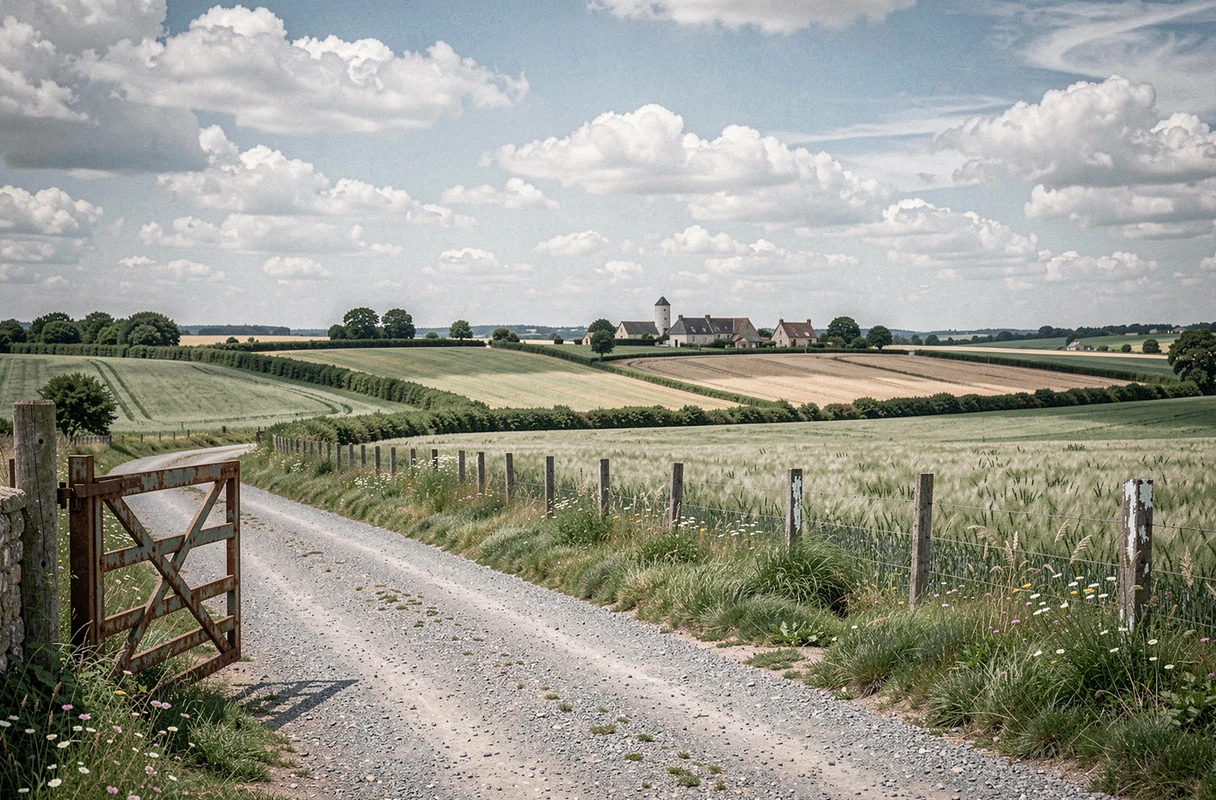
- A dominant rural environment, with arable land and wooded areas that structure the landscape
Only two neighboring municipalities stand out by their size: Fontenay-Trésigny (about 5,500 inhabitants) and Rozay-en-Brie (about 2,800 inhabitants), which have more extensive services such as a swimming pool, gymnasiums, a middle school, and a high school.
Mobility and transport: the recurring weak point
The issue of transportation remains the Achilles’ heel of the sector. The territory does not have a direct train station. Residents largely depend on cars to reach employment hubs in Marne-la-Vallée or Paris.
There are discussions about extending the RER E, which could eventually improve service to this part of Seine-et-Marne. For now, no official timeline confirms a station within the Valbréon area.
Local life and governance of the new municipality of Valbréon
Creating a new municipality is not just an administrative act. It involves rethinking local governance, budgets, public services, and the relationship between the former villages.
Specifically, the former municipalities become “delegated municipalities.” Each retains a delegated mayor and sometimes an annex town hall, allowing for a local contact for residents. The municipal council of the new municipality includes all elected officials.
- Civil status acts (births, marriages, deaths) are centralized but remain accessible in each delegated town hall
- Municipal budgets are merged, which helps to smooth out wealth disparities between villages
- Local associations continue to operate at the level of each former village, preserving each one’s identity
The main challenge is cultural. Residents of municipalities with a few hundred inhabitants do not always identify with a larger entity. The success of a new municipality depends on its ability to preserve village identities while pooling resources.
The territory of Valbréon remains marked by its rural and Brie roots, just a few dozen kilometers from Paris. Between economic development projects, residential pressure, and agricultural land preservation, the decisions of the coming years will determine the face of this new municipality for a long time.