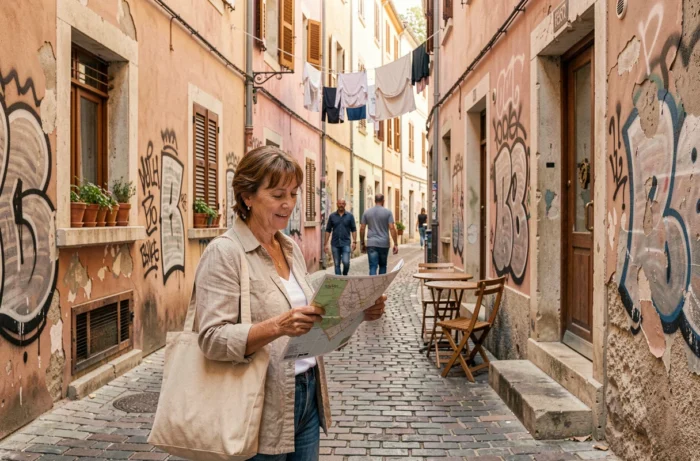
The Panier district, the historic core of Marseille nestled between the Old Port and the Major Cathedral, has a reputation for insecurity that often precedes a visit. This perception is based on a mix of historical realities and generalizations applied to the entire city. Understanding what constitutes measurable risk and what is mere fantasy requires distinguishing between types of delinquency, their locations, and their recent evolution.
Minor Delinquency in the Panier: What Marseille Trends Indicate
The distinction between categories of incidents changes the interpretation of the district. In Marseille, thefts, burglaries, and vehicle thefts have shown a sustained decline over the last decade. This decrease also affects the historic center, including the Panier.
The opposite trend affects personal offenses (threats, violence), which are on the rise citywide. This increase is concentrated in the northern districts, particularly the 13th, 14th, and 15th, where drug trafficking generates regular settling of scores.
The Panier ranks among the central areas to watch for opportunistic thefts, alongside the surroundings of the Old Port. For a visitor, the concrete threat remains pickpockets in the narrow alleys, not violent assaults. The serious risk associated with shootings or drug trafficking occurs elsewhere geographically.
Several analyses consider the Panier in Marseille dangerous due to this confusion between property crime and violence against individuals, two realities that do not overlap on the ground.
Narrow Streets of the Panier and Feelings of Insecurity: What Fuels Perception
The urban fabric of the Panier contributes to some of the discomfort felt by certain visitors. The alleys are narrow, sometimes poorly lit, and the old buildings create corners that limit visibility. This type of urban morphology generates a feeling of insecurity even in the absence of real danger.
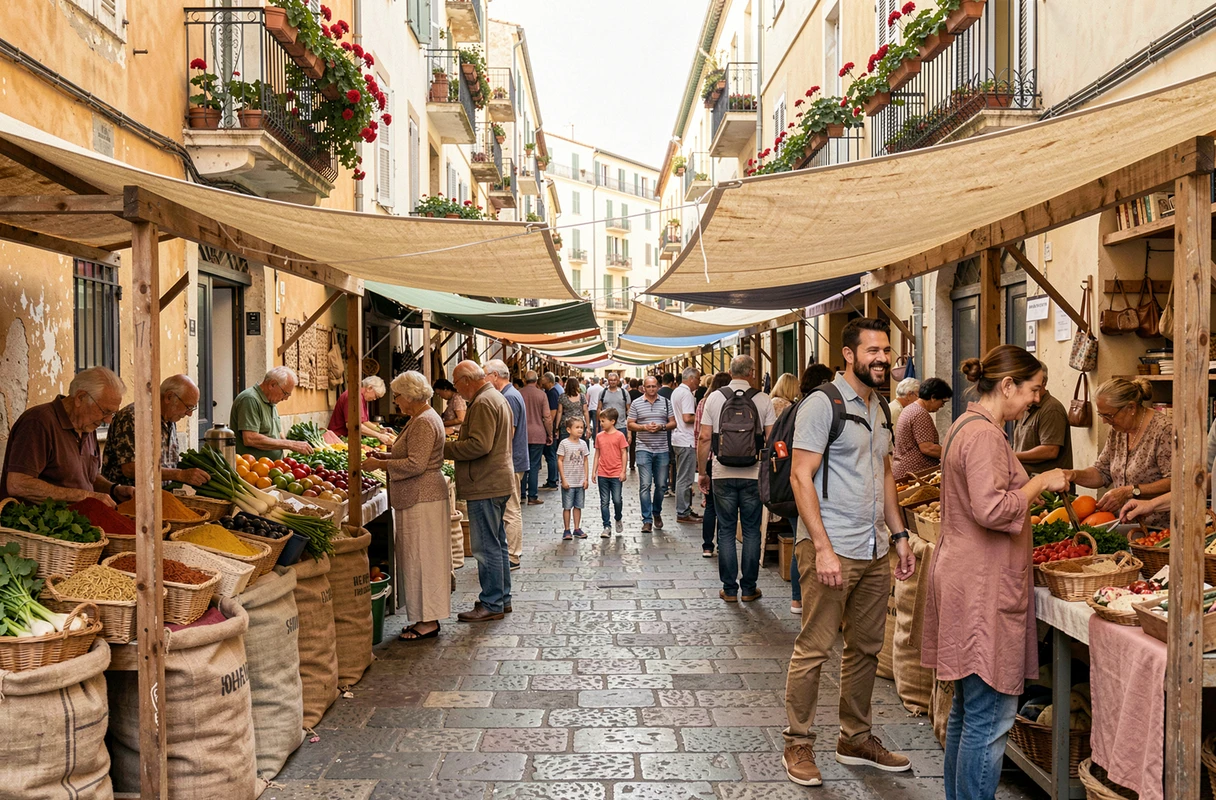
The influx of tourists amplifies the phenomenon. Visitors photograph the facades, look up, and slow their pace. This behavior makes pockets and bags more accessible to pickpockets, who exploit distraction rather than violence.
Reputation Effect and Confirmation Bias
The reputation of the Panier is also fed by the overall image of Marseille in national media. Serious news events (drug trafficking, shootings) are systematically associated with the entire city, even though they occur in well-identified areas far from the historic center. A visitor arriving with this lens interprets every sign of urban wear (tags, damaged facades, presence of homeless people) as an indicator of danger.
The Panier remains a popular neighborhood undergoing gentrification, not a lawless zone. The coexistence of long-time residents, art shops, restaurants, and tourist rentals creates an atmosphere that can be disconcerting for those expecting a museum-like district, but this mix does not equate to risk.
Short-term Rentals and Nightlife: Tensions That Blur the Picture
Since recent major sporting events, short-term rentals have significantly increased in the Panier. Residents report recurring noise disturbances, nighttime parties, and degradation of shared areas in buildings. The president of the neighborhood interest committee reports disturbed nights due to transient tenants who leave doors open and occupy common spaces.
These tensions between residents and passing tourists fuel a sometimes hostile local discourse towards visitors. A tourist may perceive this hostility as insecurity, while it reflects a conflict over the use of the neighborhood. The city of Marseille has also initiated the removal of key boxes from facades, indicating a desire to regulate the phenomenon.
- Noise disturbances related to short-term rentals are the primary complaint from residents of the Panier, not assaults.
- More than 400 short-term rental listings have been counted around Rue du Refuge, according to reports from the neighborhood committee.
- The slogan “The Panier is not a hotel,” promoted by residents, illustrates a social tension that has nothing to do with street crime.
Safety in the Panier at Night: Targeted Vigilance Rather Than Avoidance
Nighttime changes the dynamics in most city center neighborhoods, and the Panier is no exception. Uneven street lighting in some alleys reduces visibility and can facilitate snatch thefts.
The main thoroughfares (Montée des Accoules, Rue du Panier, Place de Lenche) remain busy in the evening thanks to restaurants and bars. Secondary alleys, however, empty out earlier. Nocturnal caution in the Panier is a matter of urban common sense, not a specific danger to this neighborhood.
- Favor commercial streets and lively squares after dark.
- Keep valuables in an inner pocket or a bag worn in front of you.
- Avoid checking your phone while walking in narrow and less frequented passages.
These precautions apply in any European tourist city. They do not make the Panier an area to avoid, but a neighborhood where vigilance against opportunistic theft replaces the fear of violence.
The Panier combines an anxiety-inducing urban morphology for the uninitiated, a reputation inherited from bygone decades, and local tensions related to overtourism. None of these factors pose a physical danger to a visitor attentive to their belongings. The oldest district of Marseille remains primarily a place of life, heritage, and street art, where the main risk is confusing a change of scenery with a threat.